

BRITISH WOOL – SPINNING
Our spinning revolution was the turning point of Britain’s textile industry. Twisting strands of fibre together by hand is as old as civilisation, and dates back fifty thousand years. It then took till around 500 AD for mankind to invent a wheel to speed up the process. This worked well for the next 2000 years until a series of British inventors who names are still revered today (James Hargreaves and Richard Arkwright amongst others) revolutionised spinning with their modern machines.
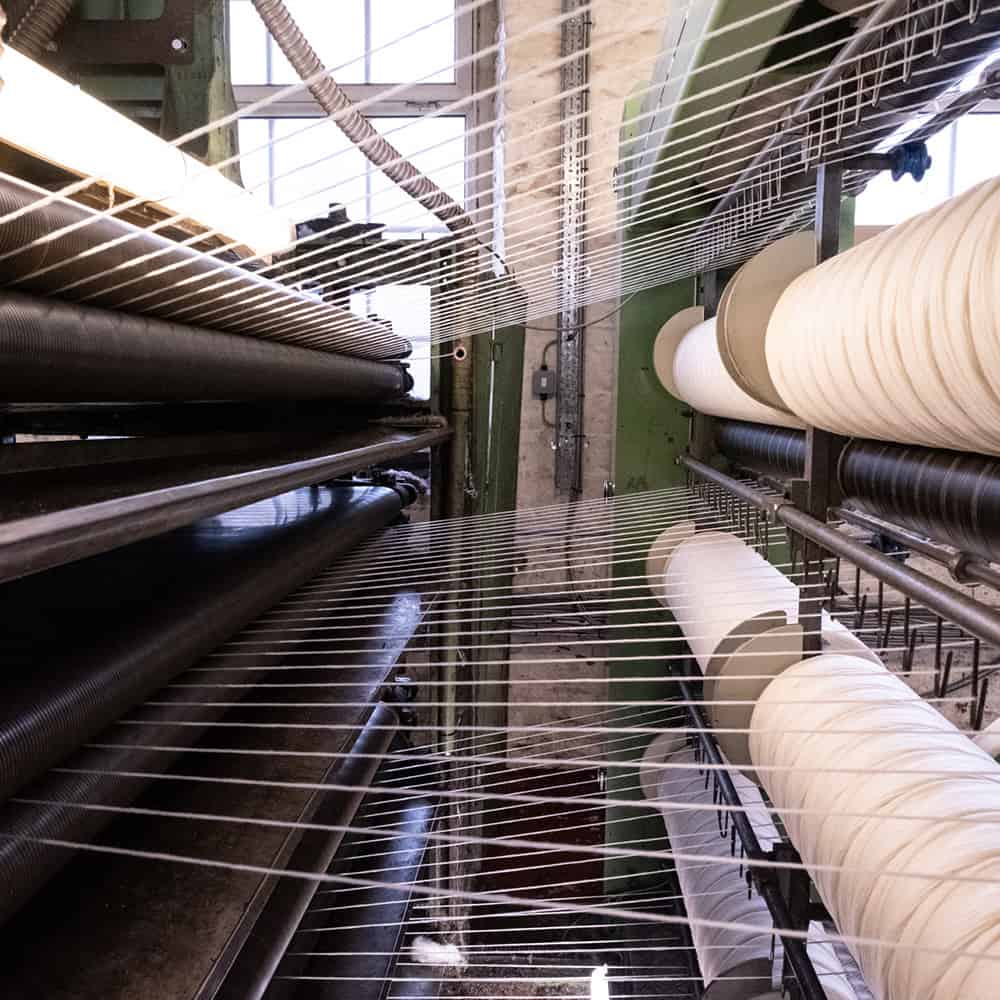
This much I knew before our enlightening trip to visit Bruce and Robin at Brierley Brothers spinners in Huddersfield. Robin Gledhill is the forth generation owner and Bruce Calverley has been working for almost a decade at the mill.
Brierley Brothers have been woollen spinning since the height of our industrial revolution. We love using their beautifully curated range of yarns which are sold under the name Gardiner Yarns.
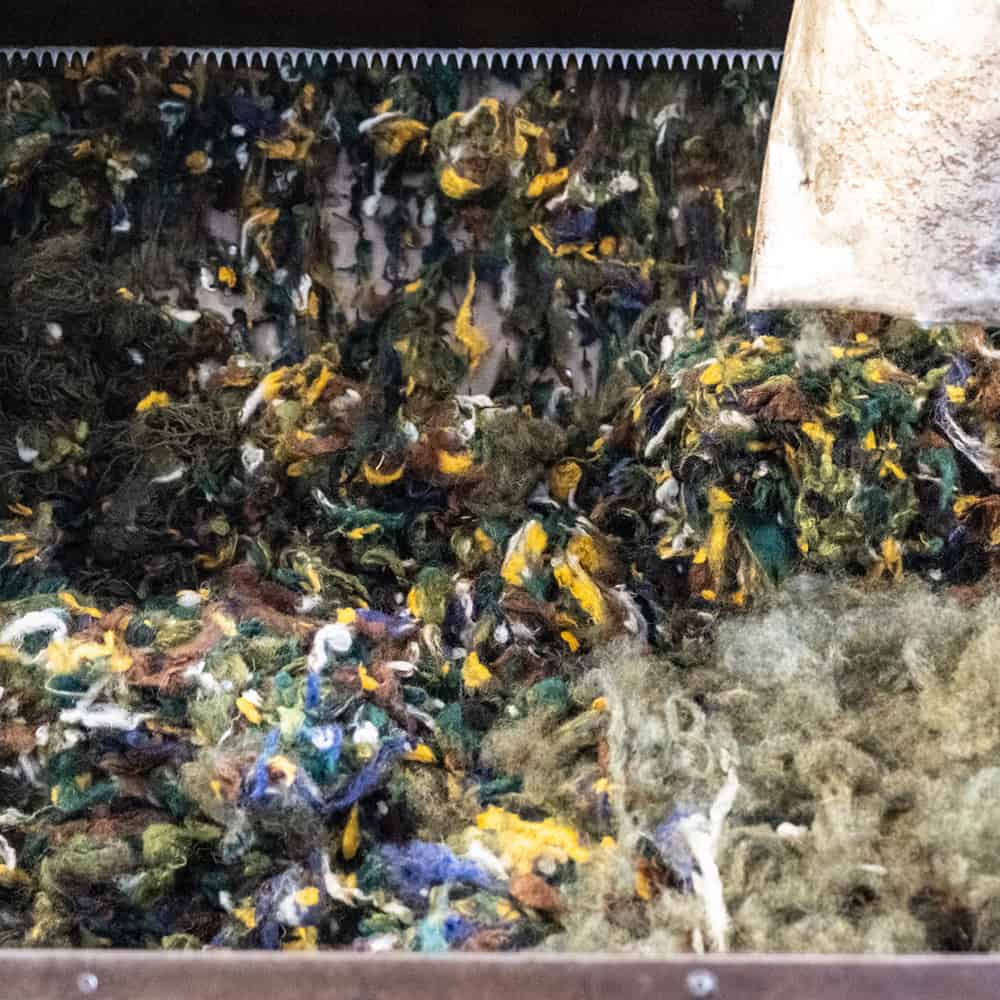
I had never thought about how the rich quality of the colour was produced before, but like so many other things I enjoy from whiskey to chocolate it’s all about blending. The yarn we see as a shade of green for example is actually a special formula of wools dyed yellow, purple, navy and bottle green which are all blended during the carding process. The formula for the colours is filed away and each new batch matched to the originals using calibrated light sources.
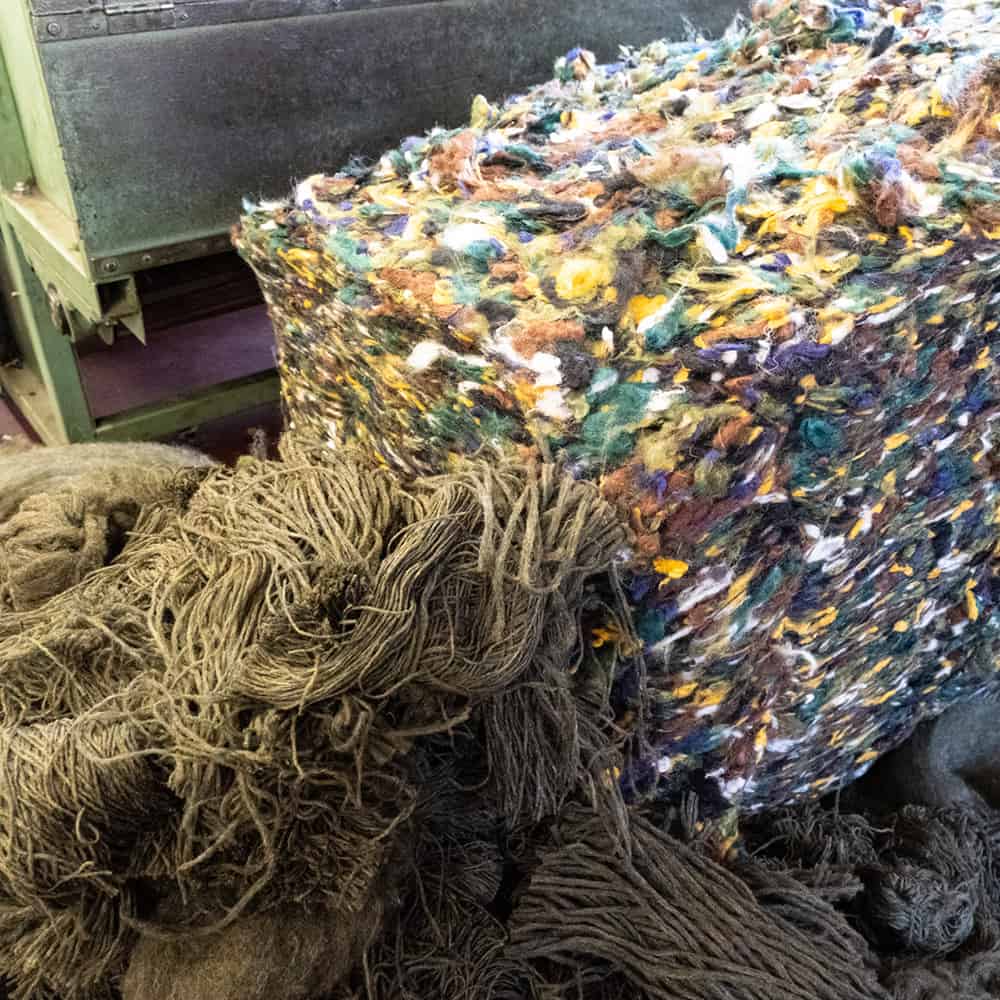

During lockdown I bought myself a spinning wheel and obtained a fleece from Mike, a friendly farmer selling lamb at my local market. My knowledge of wool processing was sketchy but it didn’t take long to pull off the fine pieces of wool, wash them and then start teasing out the fibres using a pair of spiked carding brushes. It was a laborious but rewarding task.

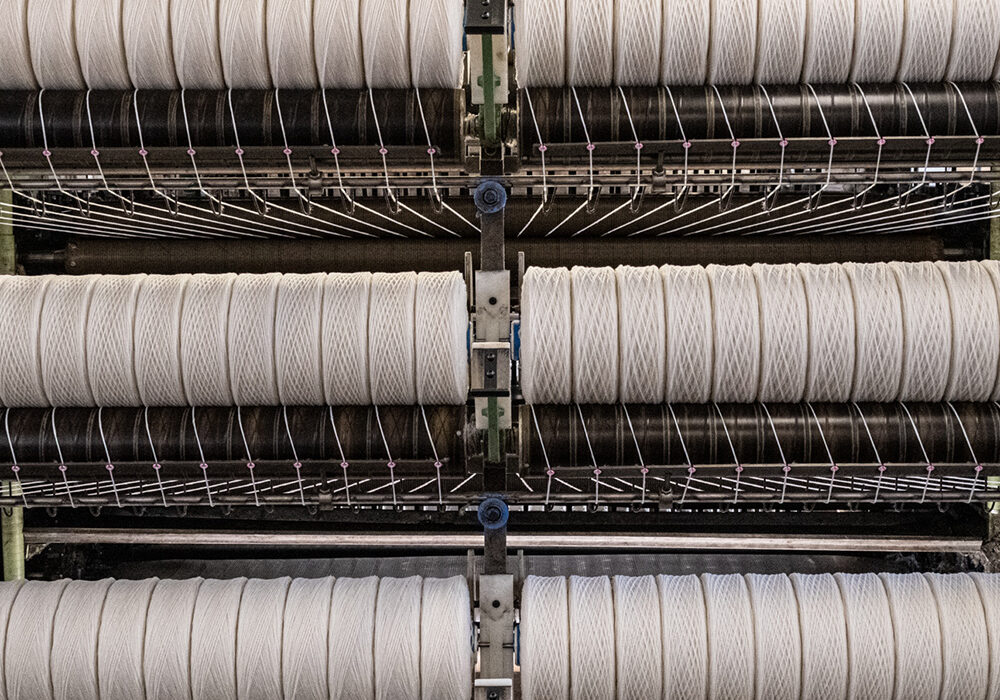
Watching this same process on an industrial scale is fascinating and actually quite mesmerising. Two tonnes of wool per week is fed into the hoppers and pulled over a range of huge rollers which separates the fibres making a smooth matt of wool rovings. This is then cleverly divided into fine slivers known as condenser which are wound around a cone. At this stage the strands of loosely held fibres are very weak. They are ready to be spun tightly together on rapidly rotating spindles impressively arranged in two banks down the entire length of the spinning hall. The mechanism seems simple but as you watch it pick up broken threads, connect them back and continue pulling the condenser wool over engineered wheels running at precisely geared speeds you see how two hundred years of patents propelled Great Britain to the top level of textile production.
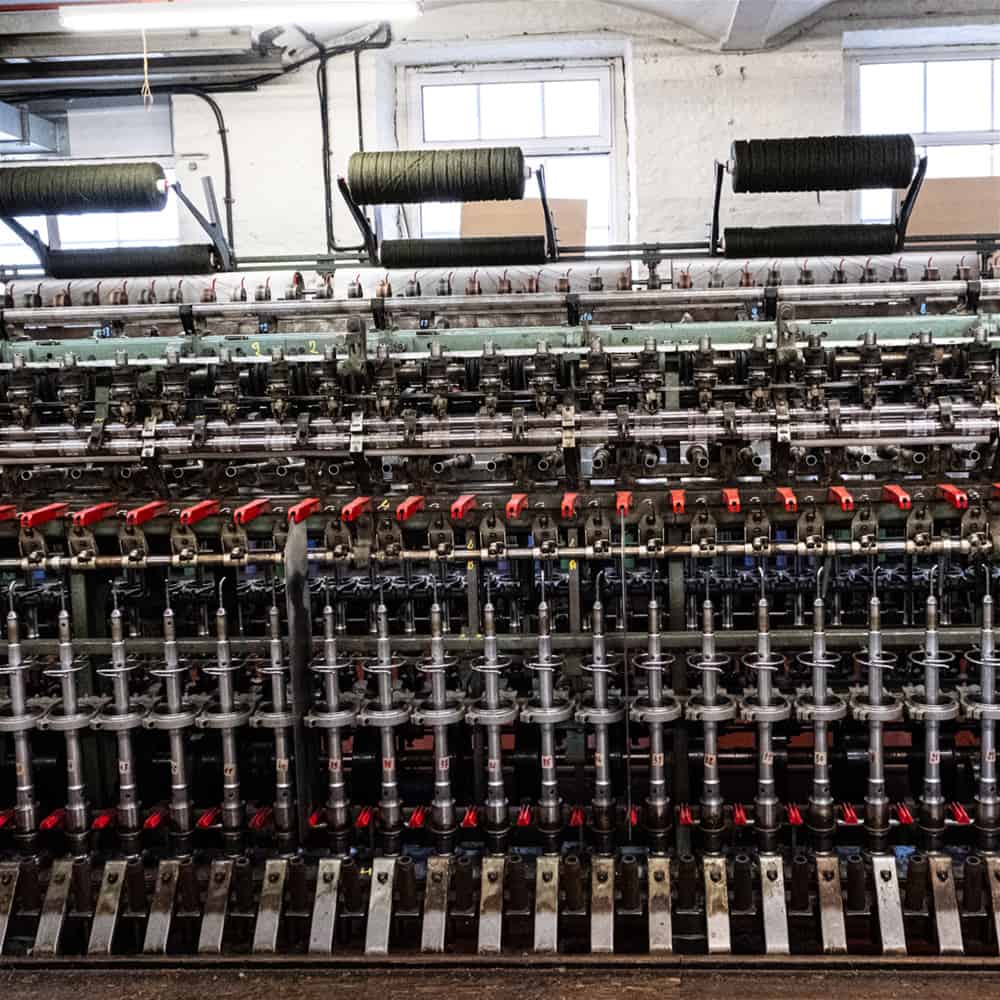
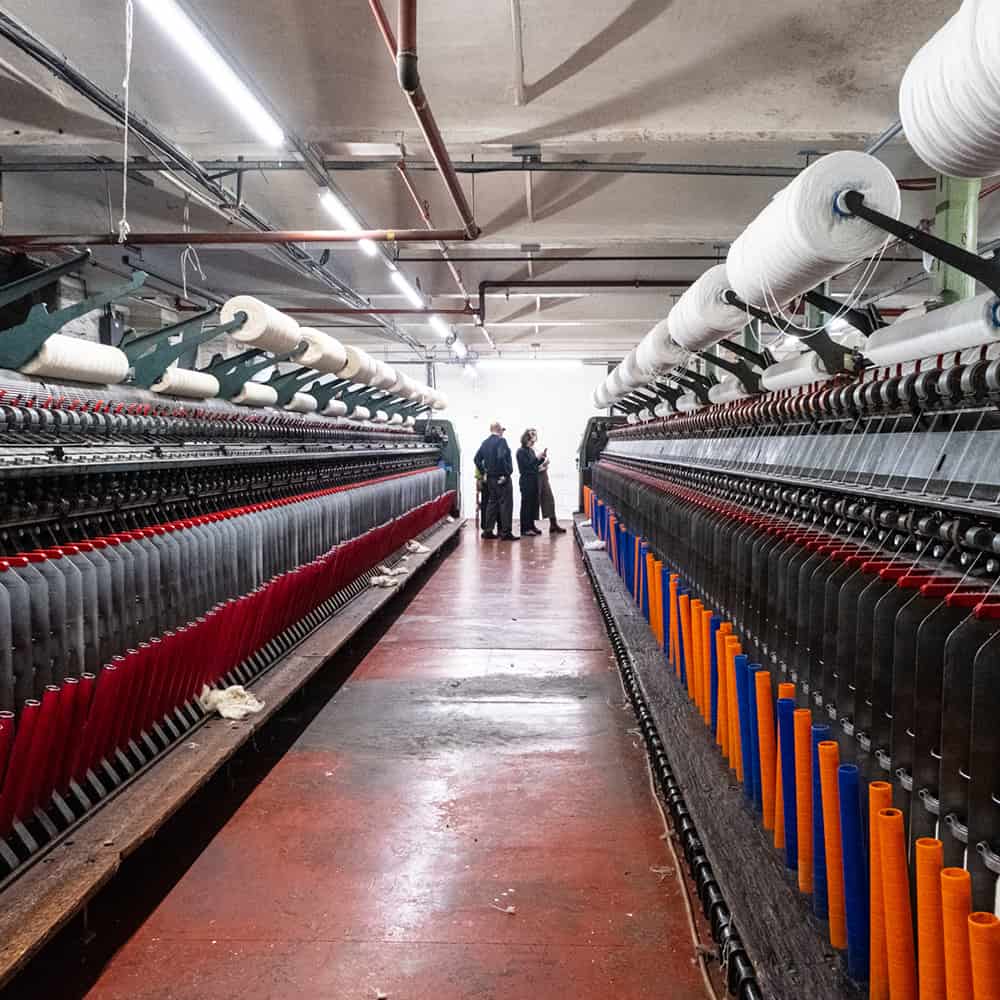
The degree of twist determines the strength and character of the yarn. Changes such as twisting the wool clockwise, known as a ‘Z’ twist as opposed to an anticlockwise ’S’ twist is all important and a laboratory area is in constant use to test and monitor every stage of the process.
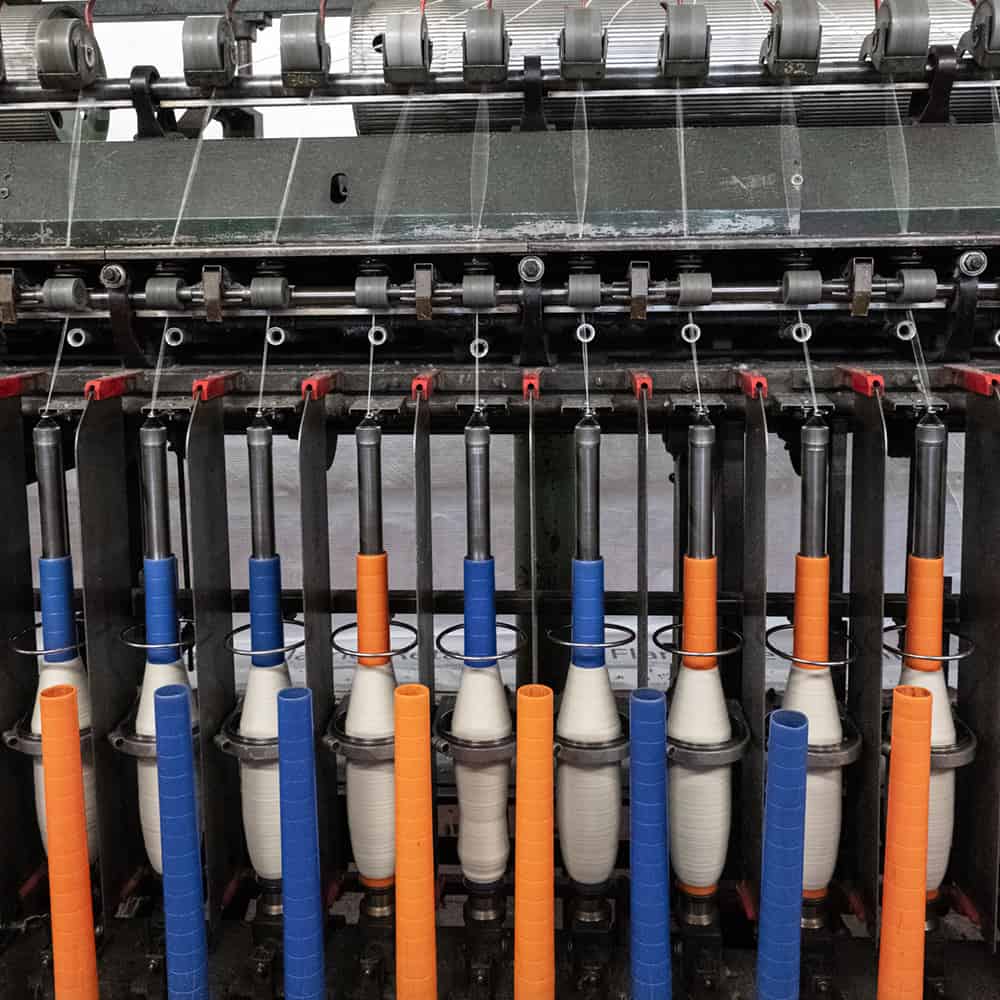
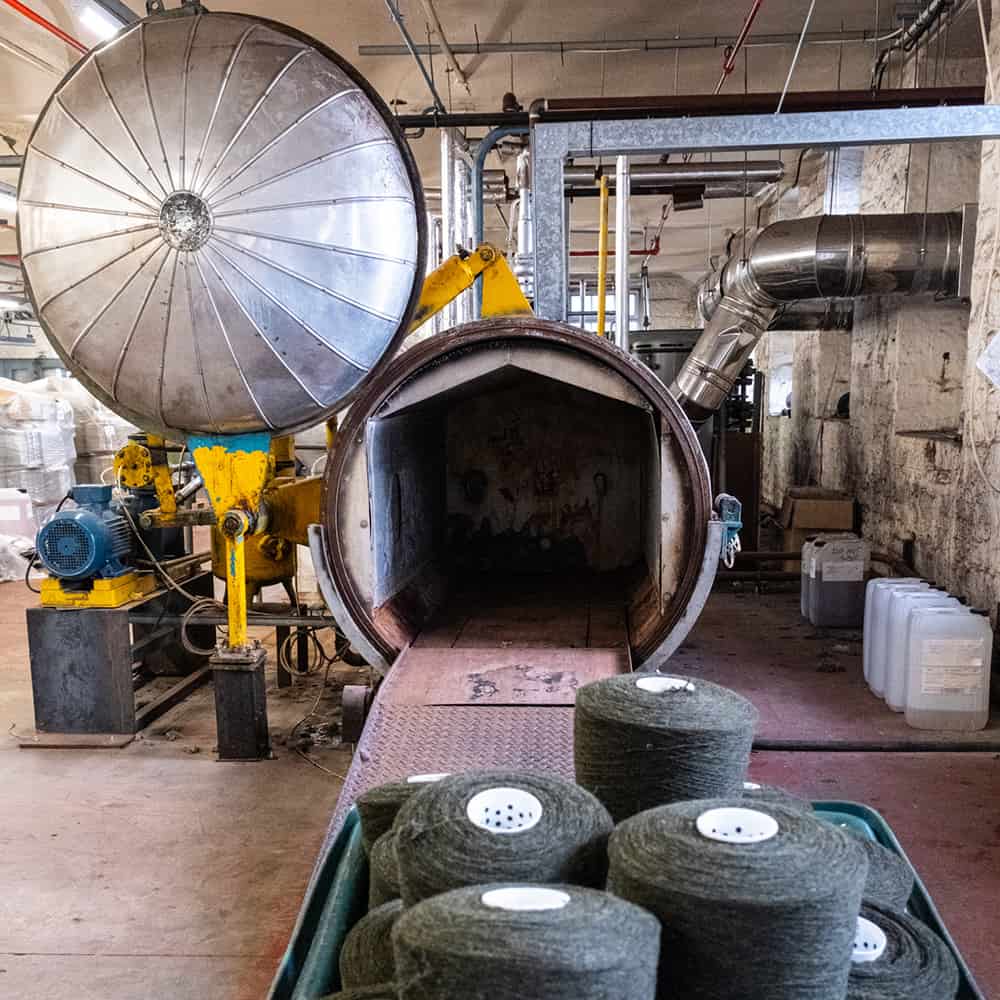
The final stage before the freshly spun yarns can be sent to the weavers is for them to be set using heat and steam in an autoclave. The yarns are transferred to cones featuring permeable holes, piled up and wheeled into a large chamber. Being a natural yarn, wool responds excellently to steam, setting the strands in position to ensure they don’t spontaneously unravel. There’s a homely satisfaction to the smell of warm, freshly spun cones of wool being unloaded from the oven that seems to evoke our whole history of wool production from cottage industry to today’s modern times.
It’s reassuring in our post modern world to realise that having tried to surpass wool’s qualities with synthesised chemical fibres we are now back to the level whereby wool is simply the best you can get for the clothes you need.
For our next AW collection, we are focusing on British wool, spun in the UK hence showcasing this whole process, watch this space to find out more.
