


WOMAN OF THE MONTH – ANDREA CHAPPELL
HOW DID YOU BECOME A KILT MAKER?
“I studied graphic design at London art schools in the 90s—Apple was in its infancy then, so it was very much an analogue affair that gave me an insight into heritage crafts through letterpress and printmaking. After graduation I entered the world of environmental graphics—or narrative architecture as it’s now called—working for museum and heritage centres across the globe.”
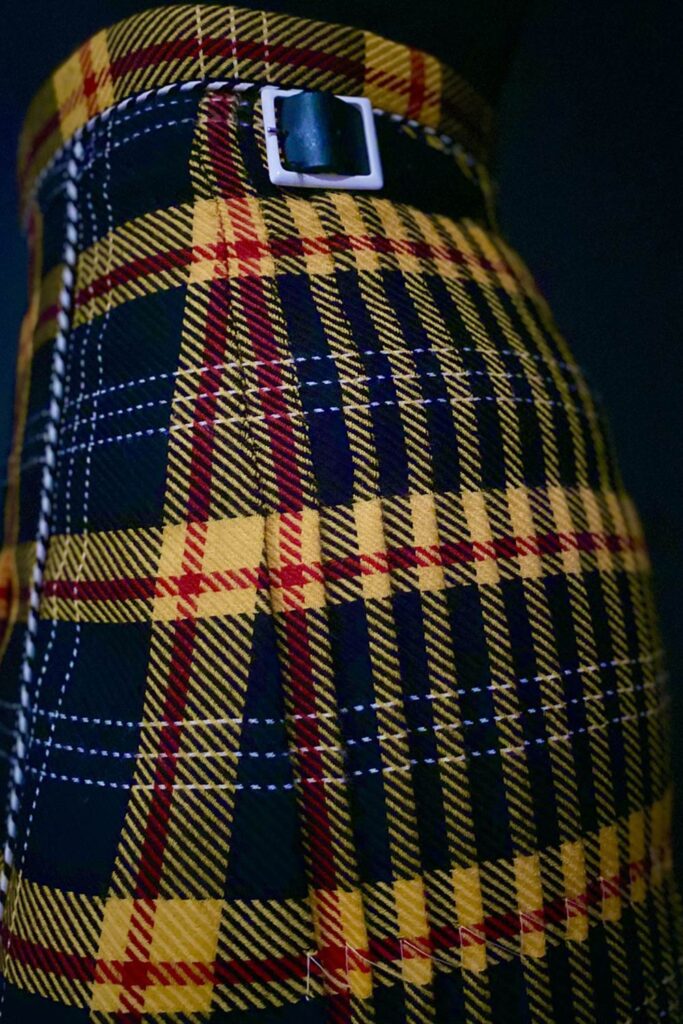
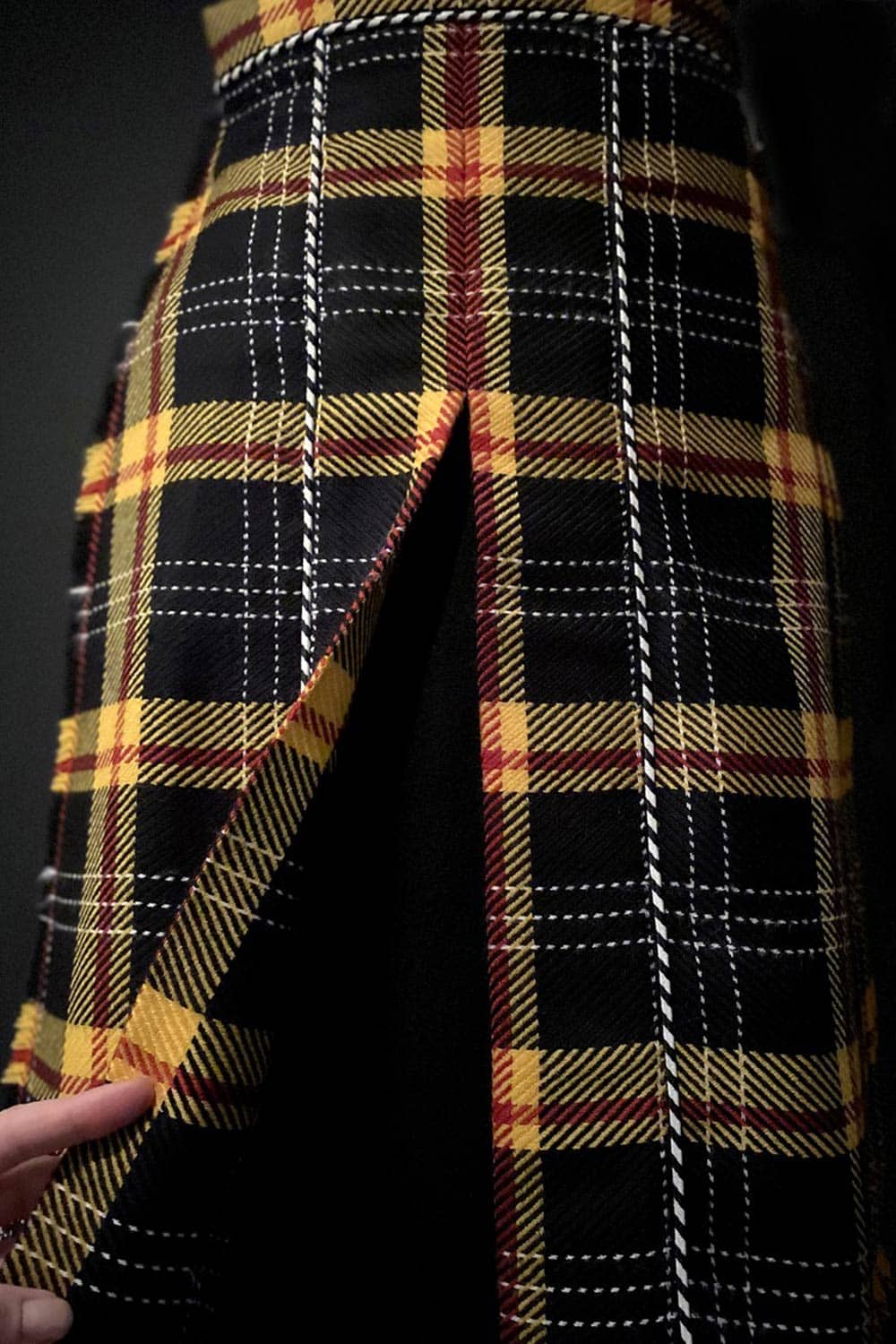
“For each project I was interpreting the stories of people and places (the same concept for tartan kilts in fact), so began commemorating each project by commissioning a kilt, as I had worn and loved the garment since childhood. I started with a plain black wool kilt, which became the most frequently worn and functional item in my wardrobe, then got more elaborate and adventurous with fabrics for each one—until I had a wardrobe full of them. A move to Scotland ten years ago reignited my passion for making, so it was a natural progression to learn the craft and make my own. Initially this was just for me, as a hobby really, then covid prompted a career change and things have grown since then. It all started with a pretty idiosyncratic personal tradition that fostered a passion that’s now my profession.”
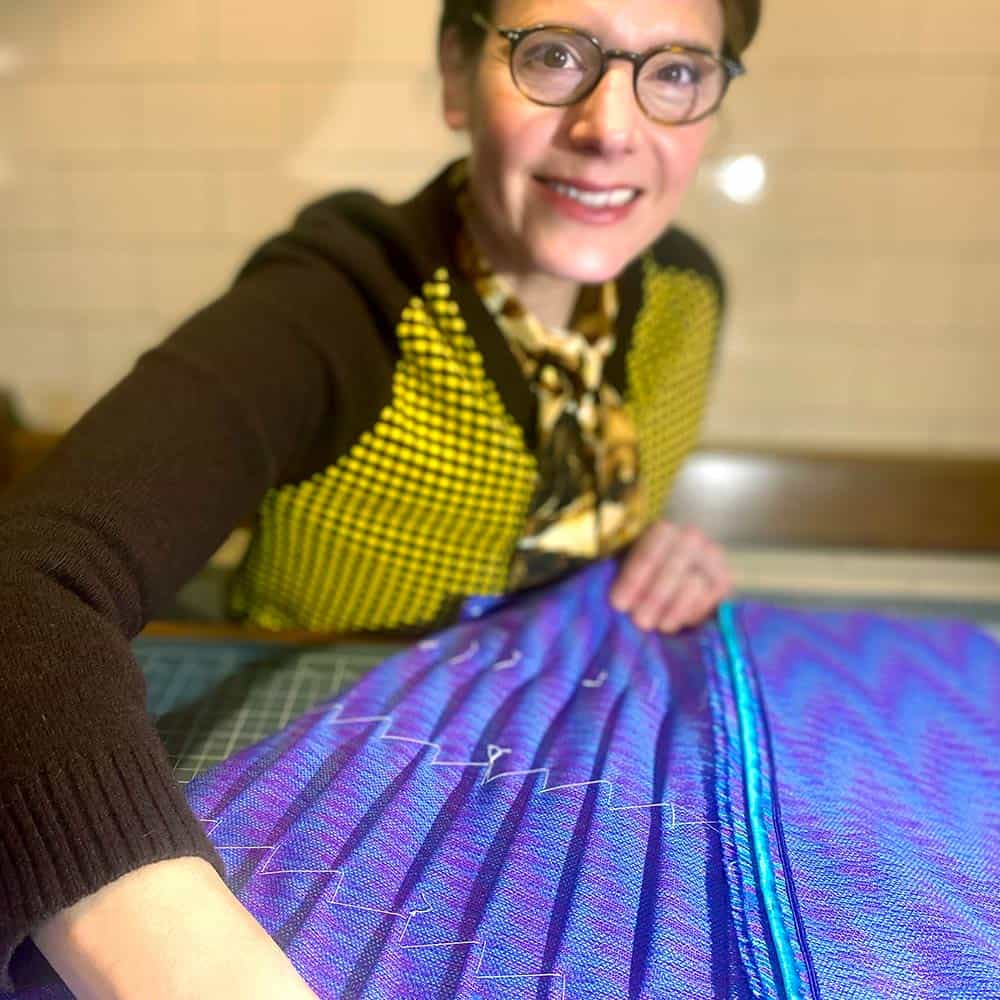
WHY DASHING FABRICS?
“As a bespoke kilt maker there are specific things i’m looking for in the cloth I use. For traditional kilt making the usual requirement is 8-9m of structured cloth— tightly woven with a firm handle that will hold a sharp pleat— hence the standard use of 13 – 18oz wool twill tartans.
But actually that’s a relatively recent construct in the history of the kilt — and heavily associated with its military form — a far cry from its origins as functional workwear, draped and folded around the body and belted at the waist. Throughout the many incarnations of the kilt form, makers have artfully experimented with shape, style and structure using alternatives to tartan, and Dashing cloth sits perfectly in this domain.”
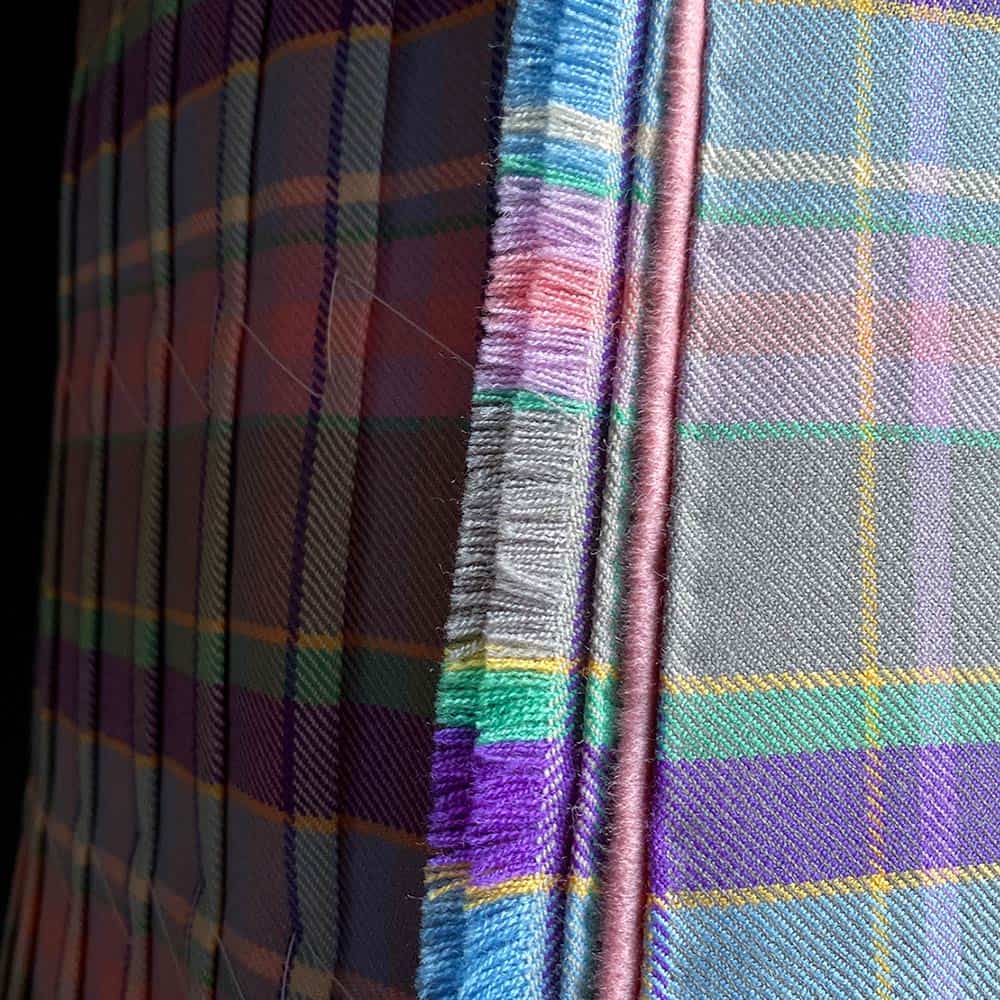
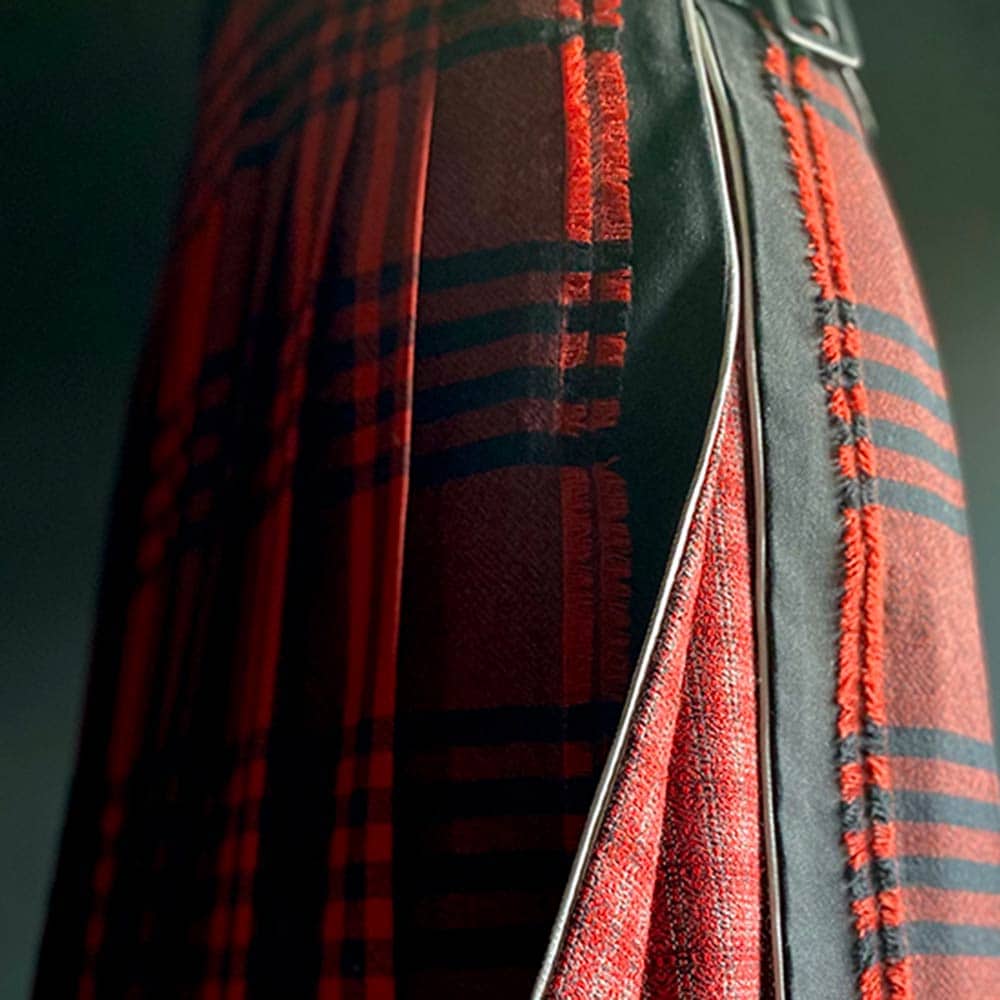
“Structurally the natural fibre compositions allow the intense steam needed to set a pleat in and the complex weaves give the support to hold it firm. Stylistically the bold colour ways and graphic compositions of the drafts give a kilt maker the opportunity to reinterpret the sett, or pattern of the cloth, to create distinction between the flat front aprons and the pleating at the back. A current kilt I’m making with Spectra cloth shows this to great effect. If there’s room to play about with the pleating then even making two kilts from the same cloth will result in uniquely individual garments.”
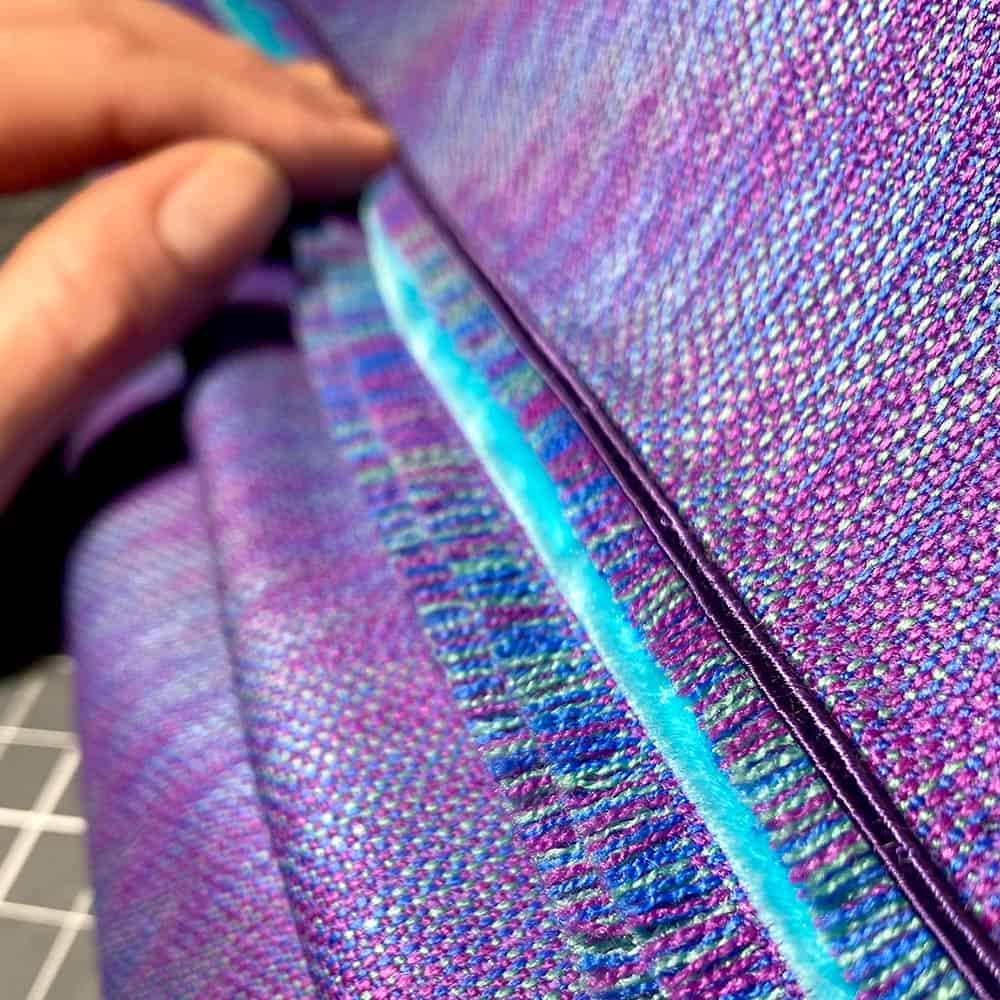
“In addition, the Dashing End of Roll and Last Chance section supports my IV36 Remaking Initiative, which I started when kilt making became an endangered heritage craft in 2021. By remaking from existing garments and remnant fabrics I aim to fund the training of a young person from my town (Forres, IV36) in traditional kilt making, supporting the next generation to enter the craft in an area where there a fewer opportunities in this field.”
WHAT DOES STYLE MEAN TO YOU?
“The comfort and confidence to wear whatever you like to describe whoever you are.”
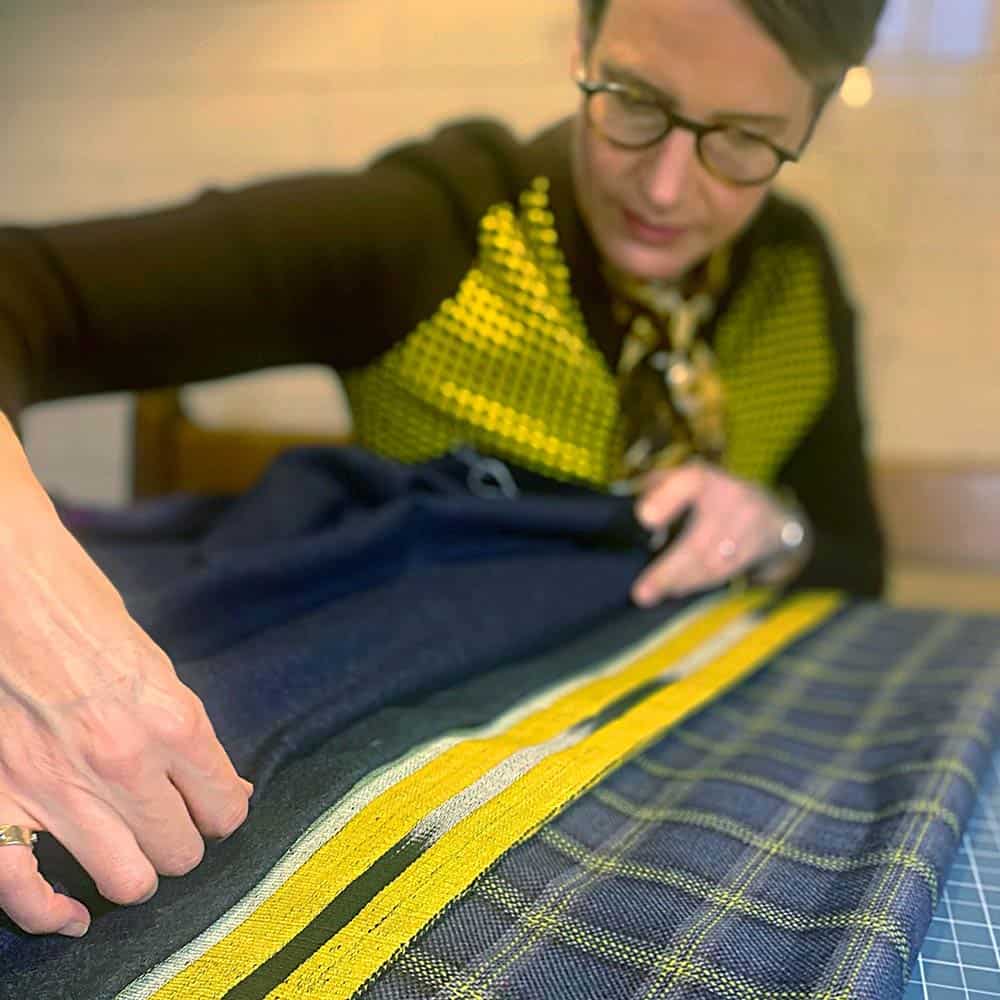
To see more of Andrea’s incredible kilts check out her Instagram page and website.
Each month we will be interviewing different Dashing men and women, so watch this space.